Freedom Through Rituals

If you are your own boss, do you need to do an employee check in with yourself? YES!

Lots of people start their own business because they want to be their own boss. What is often forgotten in that statement is that they are still an employee, they just happen to have a very strong connection (hopefully a loving one) to their boss.

Knowing where you are is power.

“Where are you?” Is probably the most caring question anyone can ask another human being. It is also what a boss wants to know about their employee. Knowing the context of someone else allows us to support them in the best way possible. 

“You are shoveling the driveway. I will have some tea hot for you (and if you’re old like me, with a few Advil on the side).” 

“You are installing your show. Do you need help picking up the materials for the opening?”

In business knowing your metrics is how you know where you are at. The metrics can tell us a lot about what is or is not happening in the studio. They can guide us to do more of what is effective, to adjust what is not working, or to abandon what might be a waste of resources. Knowing where you are at in business allows for effective management. You will know where to put your time, your energy and your money.

Relationships first, then revenue.

The known and easy metrics in business are financial. How much revenue/income did you make? What is the value of outstanding invoices due to the studio? These are great metrics to know but they are LAGGING. Getting paid is often the last step in business. If something is wrong with the money numbers it usually means there is an issue happening prior to a client sending dollars to your bank account. 

Before money is handed from one person to another, a relationship must exist. Similarly if collaborations and opportunities are part of your plan, they likely involve other people. Building relationships can be tracked. Have you connected with patrons this week? Did you complete a grant application? How many events were you at this week to meet fabricators? Your connections and the work you are doing to make those connections are a significant indicator of the wealth that will come your way in the future.

Time is a measure of progress.

Business takes time. Meetings occupy hours and flow in the studio is the intimate presence of time or not. Knowing where your time is going will give you a strong indication of progress toward a desired outcome. Are you doing work that can be billed to a client? Did you spend time in the studio, the reason you are in your business? Seeing where your time is going will indicate where you are going!

Good managers want to know where money, energy and time are being utilized. They help understand how the studio is functioning and where the studio will go in the future.

As a bonus, being your own boss also allows you to check in personally on the employee. If someone is having circumstances that occupy time, energy and even money, there is a good chance it has an impact on the work. A good boss is aware of where an employee is at in life.. They can offer grace or they can encourage to pursue work to the fullest potential. 

Good management is knowing where you are at! Do you know where you are at?


If you need support figuring out where you business is at, we offer resources to help you do that. We have free virtual professional development sessions to work on your business and offer free tools to help manage the studio. And of course our calendar is open for a coffee to talk through the joy and tribulation of being your own boss.

Banner Art Credits: German Joust of Peace (c. 1512–1515), German 16th Century, stages a ceremonial clash where pageantry and restraint share the same saddle. The scene feels both playful and disciplined. The tournament reads less like spectacle and more like a reminder: some tensions are rehearsed on purpose, allowing the real work to stay focused. (Rosenwald Collection; National Gallery of Art Open Access/public domain.)

“Getting What You Want!” What an Infant Has Taught Me About Pitching Art

In my early adult years, as I contemplated starting a family, a dear friend asked why I wanted children. In my naiveté and with a limited perspective that the world is overly rational, I said, “I want to develop a mind.” Thankfully, I have developed a wee bit in my perspective on the quantum operations of the world, and with firsthand experience I can say the joy of being a parent resides in the front-row seat to watching a human form. My parental joy is more about my observation of the formation than influencing it.

A gift of my VIP purview into the development of a human has been observing the process of getting what you want. It is INCREDIBLE what evolution—the propagation of our genetic material—has given us: namely, an ability to keep one of the most demanding species alive. It takes a lot to sustain life, even if that ball of flesh is just 9 lbs. AND DAMN the blob is good at getting what they want.

I am analytical, so let’s break down how a baby is capable of getting a grown human to do frankly insane things (months of sleep deprivation is just batty).

What is the baby’s pitch? And what can the baby’s pitch teach us about getting what we want?

The Vision: Where are you going?

I can’t step into the inner workings of an infant, but I am confident their overarching desire is to just be—to just continue living. As a parent, I share that vision with the child I am caring for. There is incredible alignment between our desires. This may not sound like a lot to go on, but let’s consider and see if it is helpful.

The vision is very simple and very clear. The baby wants to live. As a human who has the exact same self-desire, I understand it and can wrap my mind around what it will mean to work toward that goal and what it is like to achieve that goal. When we are asking someone else to join our journey, it is critical that the other party understands where we are going. A clear vision is a great first step toward getting someone else to join our adventure.

The vision of the baby aligns with the interest as a parent. I, too, want my child to live and will work toward that end. In business, alignment with vision is valuable for similar reasons: It will attract energy, effort and resources to accomplish the goal.

About You: Why are you the one to do it?

A baby—more particularly, my baby—is the perfect person to go on living in the world. They will carry me far beyond my own ability. They have the exact material I desire to get the job done and, if I parent as I hope, the personality and skills to carry a legacy far beyond.

Evolution is a very powerful tool. Keeping your genes in the game has shaped wild physiology and psychology. As humans, we too want to see our progeny live beyond us. Our child is exactly the right person to see our destiny extend into the future—or at least our genetic material.

When asking someone to give you a resource, buy a painting or hire you for service, they want to confidently know that you are capable of delivering what you say you can (your vision). Their assessment might be answered by the object that stands in front of them, but frequently they need more. They need to know your story (genetic makeup and all), they need to know what you have done before, and they may need to know who else has validated your abilities. A successful pitch—knowing or unknowing—addresses who you are.

The Request: What do you need to accomplish your vision?

It is frequently said that keeping an infant alive is a matter of three things: sleep, food and diaper changes. I can certainly tell you that is easier said than done, but my ink would be wasted compared to the immense cultural artifacts that already speak to the topic.

As a human myself, I am very clear on what my child needs in the earliest stages to maintain their presence on the planet. The challenge typically resides in my inability to interpret their request for such things. About all they have in their arsenal for attention is crying. It is a beautiful thing when we get to facial expressions, and loads of fun when sounds come together for words.

A pitch needs to include an ask. What is it that you need in order to accomplish your vision? Money is not a great answer to this question. No one wants to part with their money for the sake of giving someone money. What will the money give you? Time, resources, connections, space—these are better requests than money.

It may seem obvious when making a pitch, but it is all too easy to overlook making the request. We may not know what we need, or we may not even “cry” for someone else to interpret. It is worth exploring: What do I need, and how do I ask for it?

The Reward: What do I get for helping you with your vision? 

I have been asked if I would do it again—have another child enter my home. If I could go back in time, I ABSOLUTELY would say yes. As for adding chaos on top of chaos, the jury is still out. There are incredible rewards for joining a baby on the journey to live. If you’re curious what I have found, feel free to ask, but needless to say, parenting is DEEPLY rewarding.

We seem to again have the benefit of evolution on our side. Our kids’ genes keep us in the game. We are also capable of seeing the joy of rearing a child, or we may see the benefit of having future support as we age, or we may engage the status of being a parent. There are ample rewards given to a parent for participating in the act of giving a child a life. (And if there are not—or our perspective is off—that is what therapists exist for 🙂)

When we ask someone else to join our journey, there is an expected return for the investment, even if it goes unsaid. And I will add: If it is not said, it is probably not a healthy relationship. There is a good chance for resentment and toxicity to find their way into the connection where expectations have not been expressed.

When we ask someone to join us, the best rewards are more than money—you can get creative with what you offer. My baby’s smile, their feet pitter-pattering across the floor as they run to greet me, and bestowing the title of “Dada” upon me will reside with me far beyond any item a dollar could buy.

Your vision, about you, the request and the reward will require varying degrees of communication. Your relationship with the other party determines how much is said and how much is intuited. But all aspects of the pitch are still present—just as they are in the relationship between a parent and a child.

My toddler is not pitching his next business venture to me. But he has certainly offered me a lot of perspective on how someone who is incapable of speaking can get what they want—including my heart.

If you are interested in creating your own pitch and translating these four aspects of a child getting what they want into your own creative practice, feel free to reach out. We host free virtual professional development sessions, we have an archive of professional development resources, and we are always looking for a great conversation over coffee.


Banner Art Credits: Baby (Cradle), 1917–1918, by Gustav Klimt, shows a child nestled in a swirl of color and pattern—barely visible, yet fully central. Set against a bright yellow background here, the piece becomes more than a portrait of infancy. It becomes a metaphor for early vision: pure, urgent, and still forming. The visual noise and softness of Baby (Cradle) mirror the early chaos of communication—a fitting echo for a session about clarifying your vision and making the ask.

Creative Business Dashboards: Metrics, Tools & Weekly Check-Ins

Checkups are a very good thing. Prevention is less costly than unexpected maintenance AND who doesn’t want to hear something is better than expected or even just “everything is normal?”

Asking how I am doing physically, emotionally, socially and financially is critical to creating a thriving creative practice—and potentially a small step that can be taken today to get there. BUT as an artist or entrepreneur, we are often on the adventure on our own. There is typically NO meeting between the manager and the employee—we are both. 

A “meeting with myself” doesn’t seem relevant. Who has time to stop and ask questions? However, it is valuable to create a space where this meeting can still take place. A dashboard is a great tool for the boss (you) to ask the worker (also you), “How is it going, and what can I help you with?”

Meetings are a method for communication, and the dashboard is a tool to facilitate dialogue. A meeting with yourself can happen at any time—both parties will inevitably be available when you are free. It just depends on you to decide you need to meet. This check-in can happen on any day at any time, but it might be a meaningful way to either start the week off or to recap the week at its completion. Potentially, you do both to provide direction (on Monday) and accountability (on Friday).

What should the meeting entail?

A good meeting is one that has a clear agenda. 

Reviewing a dashboard is a pretty easy agenda. A dashboard is likely most familiar as an experience with a car. The dashboard in our car, in abstract form, highlights performance indicators, allows us to store our destination and offers directions on how to get there (thank you, GPS). 

A good business dashboard can do the same. It is a place to keep goals front and center, a place to collect metrics of progress toward those goals, a place to capture tasks to achieve the goals, and a place to provide easy access to tools to help you along the way.

Goals: Where do you want to go?

A good destination is one that is clear and achievable. 

It isn’t easy to get to a place that is not defined or accessible. This is true in business. If we do not know what we are trying to achieve, it will be incredibly hard to achieve. It is very easy to let circumstances distract us and lose sight of what matters to us—i.e. not always know where we are going. 

A dashboard that is used consistently is a great place to keep an eye on what you want in work and life.

Metrics: How do you know if you are getting there?

Being creative and ambitious are connected. Often, the vision that is held by someone who is ambitious is beyond the present ability to accomplish. This is a good and healthy thing, BUT it does mean that we may need other metrics beyond “yes, I did that” to know where we are in relation to where we are going. 

The checkbox to completion might be too far away to motivate us on the day to day. It is incredibly helpful to be able to see and assess progress. A dashboard can provide a place for us to see our goals coming into existence.

Tools: What will help you get to where you want?

A big journey likely requires tools to get there. Even a road trip needs a vehicle, tunes/podcast/book and good company. 

Building a business requires many frameworks, templates, apps and more to sustain itself. If the tools are dull or difficult to find, they waste energy and time. Having tools readily available and ensuring they are in working order and easy to find can conserve energy for doing the work. A dashboard can also serve as a toolbox.

How to Grow a Creative Business? Keep Going

If you are curious what a dashboard for your business might look like, or you have already stepped into creating an operating system for your business but would like to sharpen it, reach out to us. We love operating systems and have dashboard templates we are eager to share and help you build.


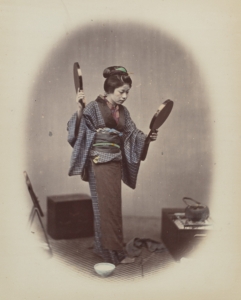
Banner Art Credits: At Her Toilet, 1868, by Felice Beato, is a hand-colored albumen print that captures a moment of quiet preparation. Part of Beato’s series Views of Japan, the image depicts a woman at her mirror—poised between stillness and intention. Digitally recontextualized here, it serves as a metaphor for the essential, often overlooked act of self-review. Just as this subject pauses to check her reflection, a weekly dashboard check-in offers creative entrepreneurs the opportunity to examine their direction, sharpen their tools, and prepare for the work ahead.


Time Management for Artists: Rethinking Your Schedule

As artists, we often think of time as something to be chased—an elusive resource that always seems to slip through our fingers. What if, instead of battling against it, rethinking your schedule regularly helped harness your creative energy? 

The power of the schedule isn’t just about organization; it’s about reclaiming control over how we work, what we focus on, and even what we avoid.

Schedule what you want to do.

The power of creating the life and business you desire is agency. You have freedom to do as you please. However, we often either don’t know how to use it (we get busy), or we let someone else choose for us (we get lazy). 

If we have done the heavy lifting of determining what we want, we can work to preserve the space to do it. We can schedule it. If we want to be in the studio or on our bike, we can put that on our calendar. 

The key is to respect the meeting with yourself. We can tell other people that time doesn’t work. Rarely will anyone ask why; it is easier to just move on to another suggested time. Furthermore, when we say no, we quietly become more valuable.

Schedule what you don’t want to do.

When we first start building our own business, we have to do everything within the venture. We need to make our products, grow our markets, build relationships with customers, collect our money, count our money, explore our next creative project, and keep our space and lives together. 

There are a lot of things to do, with varying degrees of joy felt when doing them. For those less-than-fulfilling tasks we need to accomplish, we should be our own boss and assign them to ourselves (this is what it means to be a boss—telling someone to do the stuff we may not want to). 

When we know the assignment is due, we can schedule time appropriately to accomplish it.

Schedule what you don’t want to do—in small doses.

The detestable tasks (paying taxes, organizing the supply closet) may need to be broken into small, manageable steps to progress toward the goal. 

The Pomodoro Technique is a great tool for this. Set a timer (25 minutes, or about what it takes to boil pomodoro tomatoes) and work without distraction. When the alarm rings, you are free to move on with life, or even reward yourself. A couple of things happen in this process: 25 minutes is not much time to endure, yet 25 minutes of focused work can be meaningful. Often, at the end of 25 minutes, our productivity begets energy to continue the work and get closer to being done. 

Completing a marathon requires a series of small steps.

Scheduled time is trackable time.

Time is the only resource we cannot get more of (with current technology). If we do not know where our most valuable resource is going, there is a good chance we are wasting it—or at least not being compensated appropriately for it when we determine our prices. 

Scheduling (or documenting) our use of time is one of the most helpful tools we have for growing a sustainable business. There is no bank statement at the end of the month to tell us how we spent our time; however, if we keep a schedule, we have an opportunity to review our time expenses. Tracking time enables us to know our real cost and be compensated correctly for it. Awareness of time equals better pricing.

There are many frameworks and tools out there to utilize time. If you’re into artificial conversations, you could likely have a great one with your favorite computational language model (AI).

Rethinking your schedule alone?

Time is difficult to comprehend and difficult to consistently harness to do the things we want.

Getting an outside perspective can help you see how to better align your time with your goals. Whether it’s for creative growth or business clarity, brainstorming with someone you trust can be the catalyst you need to transform your schedule from chaos to clarity. If you’re not joining us for our free virtual coworking sessions already, these are a great opportunity to see what’s working for other creative professionals.

If you are having trouble wrapping your head around your time and how best to use it, reach out to get a coffee with us. The cost of the beverage is on us, and potentially the expenditure of time is a great investment for you.

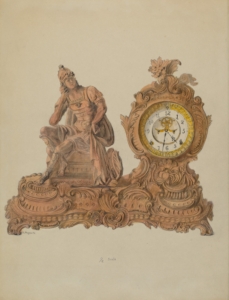
Banner art credits: Ansonia Clock, c. 1936 is a watercolor and graphite on paper piece by Edith Magnette in the Index of American Design. The graphical style of the Index of America Design makes the individual works a quality of reproducibility that translates easily across modern digital forms. Intentional planning creates space for deeper creativity, turning time into an ally rather than a source of pressure.


Time Management for Artists: Rethinking Creative Energy

Much ink has been spilled on the value of time. No need to waste it now trying to add my poetic spin. Time is everything. But how do we need to approach time as artists? How do we harness our creative energy?

Utilizing time effectively starts with a mindset.

Time is a form of energy.

I don’t have the mathematical prowess to prove it, but time makes things happen. It is an energy. It is a combination of physical things and movement (E=mc2, anyone?). As artists in business, we need to understand that to manage our time, we should see it as energy. 

Time is not just the physical things we have to do but also the mental and emotional effort we have to exert to accomplish our desired life. When we approach our creative work, we need to consider the physical aspects and the effort utilized within. It is easy to think we can do more in a day than we actually can. 

Be more fulfilled by doing less. Get more done by doing less. Get more done better by doing less.

Time is a social concept.

If we navigate the universe on our own, time becomes pretty meaningless. There would be no external person pushing us to accomplish anything. Deadlines would cease to exist. This might sound euphoric, but the external pressure is valuable to push us to get things done. 

Furthermore, if we want to accomplish something bigger than ourselves, we need other people. If we intend to do life with folks beyond ourselves, we need to operate within and respect the realm of time. 

“Tuesday” means something that connects us with others. Knowing this helps us accomplish things on Tuesday.

Busy is destructive.

Busyness is not a badge of honor. I feel anxious when I find myself describing my life as busy. I use that word when I am pulled in too many directions, with fleeting resources to accomplish what I desire. 

A too-full schedule slows down creative energy. Busy reduces depth for thinking, feeling, and exploring the unknown. I often end up in a busy place when I haven’t done the work of determining what I actually want. Knowing what we want allows us to say no to things that we don’t want, which frees resources/time to use for generative, fulfilling things. 

Fulfillment is the goal, not busy.

Harness time, channel creative energy

If time is truly energy and a shared social contract, then managing it isn’t just about checking boxes—it’s about channeling it toward what truly matters. Start by doing less. Not because less is easier, but because less is often better. It’s about focus, presence, and energy flow. 

If you think of time as a force to be harnessed, rather than chaos needing order, you might discover a new rhythm for your creative energy—one that feels less like a race against the clock and more like a dance with it. 

Banner art credits: The Nile—Evening, 1905-1911 is a watercolor over graphite on wove paper piece by American Artist Henry Bacon (1839 – 1912). This piece features the serenity of sunset, and a moment of pause amidst movement—a perfect metaphor for rethinking creative energy.


Navigating Personal and Business: Dashboards for Creative Entrepreneurs

In The War of Art, Steven Pressfield advocates that young writers take the step from amateur to professional by writing a contract as though they were hiring themselves for the work. Dashboards for creative entrepreneurs help to navigate this tension between personal and business.

While it may seem unnatural to separate those roles, it is a balance small business owners already play whether or not they admit it. Externalizing this antagonism between the creative as producer and the creative as manager makes goals clearer and more measurable. It also benefits work-life balance.

A “dashboard” keeps the most important measurements within view. This post outlines how to create a personal and business dashboard, and how to get the most out of them.

The Personal Dashboard

A personal dashboard empowers the creative as an employee to build their work around fulfillment and well-being. To start, ask what part of creative work brings the most fulfillment. This indicates what values should drive a personal dashboard. It also builds clear expectations about why the business exists in the first place.

Generally, the categories of love, play, work, and health capture many of these values for most people. It can include family, friends, recreation, connections, career, money, mental or physical health, and more. Everyone finds a different balance. This dashboard should depict a fulfilling lifestyle that makes the hard work of entrepreneurship worthwhile for you.

Likewise, these are the categories that dip when we ask ourselves “is this worth doing?” or “are we doing this correctly?” This personal dashboard monitors the well-being of the small business owner as an “employee.” It enables more fine-tuned decision-making when the manager must adjust to promote better working conditions.

The Business Dashboard

Next, put on the manager hat to create a business dashboard. Step back and evaluate the many aspects of your business: production, finances, sales (marketing, relationships, networking), and administrative. Break each further down into categories that make sense based on the goals of your unique work.

Production should include hourly goals and targets for work. This is what is expected of the “employee.” Finances include targets for discrete periods of time (weekly or monthly goals). Sales may be goals related to new connections, events to attend, or managing marketing content. It could also include expectations for follow-up with existing clients. Administrative tasks are those tasks that seem the least important but help to alleviate stressors.

Where are you trying to land? These categories are unique to each business and should be accompanied by the big picture growth goals and how they are connected to production. With an annual financial goal and working time estimates, artists can better visualize hourly revenue targets (HRTs) that can be used for day-to-day management. 

A practical example of dashboards for creative entrepreneurs

An oil painter’s annual revenue goal is $50,000 (to cover their salary, cost of goods sold, other overhead expenses, etc.). They calculate that their average piece takes about 4 weeks to produce while painting for 20 hours a week (that’s 80 hours per piece). They need to sell about 13 “average pieces” at $3850 to meet the artist’s revenue goal of $50,000. At 80 hours per piece, the artist calculates their HRT is about $50. Now, they can use this $50 HRT, to evaluate the progress of each unique piece. 

They just sold a commission for $2000. To meet their $50 HRT, they need to complete this piece in about 40 hours. 10 hours in, they estimate the piece is more than halfway completed. In this case, they’re exceeding their hourly revenue target. The artist plans to put a portion of the projected profits into framing expenses as a gift to their client.

They are also working on another large piece that does not yet have a buyer. Previous pieces at a similar size sold for $7000. At this price they need to complete it in 140 hours to meet their $50 HRT. They are 100 hours in and not yet halfway. Assuming that rushing to finish isn’t an option, they must anticipate demanding a higher price to satisfy their hourly revenue target (and ultimately their annual goal). Can the piece be sold for $10,000? Is there other work meeting hourly revenue targets that should take production priority over this one?

Your dashboard should display the right metrics to easily view the most important aspects of your business on the fly. It will also help maintain positive cash flow. Identify these categories, then break down quarterly or yearly goals into actionable steps that can be tracked on a weekly or bi-weekly level.

The Power of Weekly Check-ins

Dashboards for creative entrepreneurs tell how this week’s work moves you toward this year’s goals.  Ask, “What can be done today to move toward the business goals?” Create space for weekly check-ins focused on assessing how the progress of tasks aligns with distant targets. In the example above, the artist used their hourly revenue target to check-in on production progress. The weekly metrics empowered small decision-making to achieve larger goals. Explore different structures for this. Some may prefer the beginning of the week, others may prefer the end.

Each weekly check-in should include an evaluation of the personal dashboard and the business dashboard.

Record how personal goals are being met. Take note of trends and reflect on them. The same goes for the business dashboards. If trends are negative, how can the work adapt? If they are positive, how can the same thing be achieved next week?

Ultimately, regular check-ins are the only way to know whether the business is moving in the right direction at the proper speed. Otherwise, there is no way to reorient work over time (especially considering the complexity of creative entrepreneurship). Instead, problems will only become clear long after you could have avoided them; and moreover, you’ll miss opportunities for growth.

Your dashboards should change over time. Dashboards help the work evolve and will evolve alongside the work.

Tools for Enhanced Productivity

The tool that works best is the one you will use. Whether this is a simple spreadsheet or a custom note-taking solution. Develop a cluster of instruments to make up your dashboard. It should be easily accessible and simple to update during the course of work without interfering with production.

Take advantage of outside tools that already offer useful reports.

  • Financials: Most bookkeeping software produces weekly or monthly cash flow reports. Even basic online banking dashboards have tools to create financial reports and categories.
  • Production: Inexpensive hours tracking software offers the opportunity to better code and analyze how time is being spent week to week. Many of these run customized reports and queries that would benefit the production section of a business dashboard.
  • Sales: Email marketing platforms and social media are built to offer valuable analytic insights for existing content. Familiarize yourself with the analytics that matter most to your business: opens, messages, click-throughs, etc.

Even if a business dashboard pulls information from multiple sources, design something to consolidate and track everything in the same place week to week. A corporate board meeting pulls tons of data from all different sectors of a business, but it’s consolidated in a way that each part of the business can be analyzed in tandem.

You are your employee, manager, and board. Invest in a method that curates your dashboard for the benefit of the whole business.

Be Patient

Great data analysis opportunities require data. The more of it, the better. This takes time. If you have never set goals or just started collecting regular data on your own work, be patient. At first, it may not appear to provide many insights. However, after a few months or even weeks of tracking your productivity and accounts, patterns will emerge.

These patterns are the power of weekly check-ins. Next year’s round of goal-setting can be based on data rather than speculation. The production requirements required to reach revenue goals can be approached with reason and sensitivity to work-life balance. Ultimately, this practice of regular self-check-ins and structured goal-setting helps small business owners who must wear many hats sustain their work with better clarity.

If you’ve never engaged a group of creative entrepreneurs who juggle responsibilities in this way, attend a co-working session. Our free, monthly sessions give creatives a collaborative opportunity to share in others’ successes, learn from failures, and build external accountability of their work. Work on your business with others while facing the challenges of creative entrepreneurship together.

What Sex Education Taught Me

I recently binged on Sex Education. No I am not referring to the awkward lessons of adolescence.

The Netflix series indeed has it’s unpleasant moments as it focuses on a high school age troupe of characters navigating the lifelong adventure of discovering-oneself. The protagonist, Otis (Asa Butterfield), is the son of a divorced sex therapist (Gillian Anderson), who is persuaded by the cool girl (Emma Mackey) in school to start a relationship clinic at their private academy. The series is worthy of focus. It is good long form storytelling with well written dialog and appropriate ups and downs and twists and turns. I enjoyed the experience.

A scene that lingers for me is late in the premier season. Otis, the teenage therapist, is discovered as not having had intimate relations through an unexpected encounter with Lily (Tanya Reynolds), a sex-crazed nerd. She is kind enough to keep the dilemma to herself but realizes it is a bargaining chip for free therapy services when she discovers her theory of sex does not match her experience. Otis reluctantly takes on the case. Otis needed to do so for the obvious reason of protecting a budding industry and more importantly his all important high school dignity. HE also needed to take on the case because it is his own narrative.

Otis is wise (and actually beyond his years which is somewhat of a shortcoming of the writing) and practices a well known therapy tactic of using another field of physical practice to alter the mental experience of a patient. He takes Lily by bike to a large meadow with an epic hill. His treatment is for her to ride down the hill. He suggests that she needs to face a fear and embrace it, or rather she needs to let herself go. Lily is rightfully hesitant and in the moment suggests that Otis too needs to let himself go. Lily then takes off with Otis watching. Within short order he realizes she is correct. He too proceeds down the rough hillside to experience freedom.

The advice is astute. We are often the greatest obstacle to achieving our desires. The way we can find freedom from our mental blocks is likely to let go. To embrace the choice and let the hill take us to our destination. YES it will be incredibly scary. YES we will certainly lose control and YES we will fall. BUT that pain of that moment of hitting the ground and even the weeks of recovery will never be as great as the agony of living life having not tried.

Hop on your bike and find a place to experience flow in a realm that is somewhat uncomfortable so you can sit in your studio and produce what needs to be produced.

Performance Mindset

I have always been an active person. I grew up playing team sports both organized in public gyms and impromptu scrimmages in neighborhood yards. I ran cross country in high school and eventually retired from sport when I went to college. While studying to be a grown up, I came out of retirement when I was wooed into mountain biking. After a baptism at my first stream crossing, Saturday bike rides in the woods and on the roads became ritual. For 15 years my fitness had been maintained exclusively outside.

Stepping back into a gym changed my body but also enhanced perspective on success beyond the facilities doors.

In 2015, I entered a gym for my first indoor workout since freshman year of college. I bought a Groupon for Yoga. My friend Brandon, requested my support for his effort to get chest-baring-ready for a professional dance performance. Yoga captured my being. I enjoyed the physicality of the sessions, and found enlightenment in the practice. I dreamed about my mat and watched my body change. It was going great until our sessions were up.

Brandon still had 3 months to curtain and wanted to continue the path to professional form. He suggested we buy another Groupon, this time for Crossfit. Yoga had been great, so why not?

I entered my first crossfit gym for a 6:30 PM work out of the day (wod) on a cold February night. Intimidating is an understatement. The space was sparse with tortuous looking apparaty around the walls. The previous class was wrapping up and their strained looks showed desperation for seconds to pass and more than hinted at what was to come for me. The specimens of humanity present in the gym were lessons in platonic human-body form. I am not fat, but I certainly did not have ripples in those places. Music was blaring to pump up the athletes and likely to drown out the grunts of agony. The gym owns the title of “box” as inevitably a box is the only place you could imagine physical duress to take place.

Inside this box, there is much to learn from a mindset of daily performance.

The typical session for crossfit starts with a coach describing the routine you will endure during the next hour. The coach walks you through the technique and the strategy you will need for the performance. A coach shows the most appropriate positioning for a movement and suggests the most efficient tactic for completing the task at hand. Too much reliance on oneself in crossfit might lead to injury and likely will elongate the agony you must endure to finish.

During the chalkboard dialog, and in the midst of warming up the body and mind, the coach will note who is in attendance. It is important to document when we have done work and what we have done. In some crossfit gyms it is merely a name on the board, but technology is also used to preserve the information for greater analysis. Without documentaiton, the we cheat ourselves of both knowing our victories and understanding our weaknesses.

Once attendance has been taken, the plan has been made for the work out, and the technique tweaked through several rounds of building the motion or the volume of weight… the performance begins. The surroundings fade. There is little energy given to the cognitive efforts beyond the physical task at hand. It is hard to discern even what the blaring music is in the background, let alone what my colleague five feet away from me is doing. Is she ahead of me? And is that guy really doing more weight than I am? Those questions are not able to cross your mind. The challenge of the work, and the desire to excel at it, requires utmost focus on what matters, finishing. To complete the task you must do every rep yet only be thinking about the next movement required to conquer the beastly workout.

When the clock stops or the last round is retired, there is a chorus of euphoria. You hear the music of the room again. Your body is singing to the beat of your racing heart and tingling with the natural high of hard exertion. Your mind is back to a harmonious state thinking about the sense of accomplishment. You are rewarded for stepping up and performing!

The wonder of crossfit is not over when the timer chimes. You still need to report on your work. Either publically or in private, you record your score. The documentation allows for consideration of your position, certainly by you, likely by your coach and if you really want to grow, by your peers. You have a mark to compare either to the past or to the future with yourself, and even with others. You have an opportunity to improve and consider what might lead to different results. Performance is not complete without evaluation.

Crossfit highlights the value of approaching everyday as a performance.

First and foremost, peak performance requires guides. There are people who have gone before you that can provide insight on optimum execution. They can refine your skills and expand your thinking. Their understanding of rudiments of life, business and recreation are what you can build your practice upon to achieve and exceed beyond your goals.

Peak performance requires preparation. The warm up is key to success. Anticipating the feel of an experience and tweeking the small things when the clock is not held against us allows the mind and body to do exactly what it needs to when it matters.

Peak performance requires focus. Circumstances change and are hard to predict, we have to be able to complete the task at hand regardless, and to do so requires that we focus on every step along the way.. We will certainly miss the minor but meaningful shortcuts if our frame of reference is wrong, and we will likely miss the mark if we do not keep it in sight.

Peak performance has destinations that you can celebrate. Smart goals, or knowing the intent of the performance, gives you something to pause and stand in wonder at your abilities. They are natural points for rest, reward and conjuring up the next idea.

Peak performance is achieved through analysis. It is hard to know if you have reached the peak if there is no marker. It is also hard to know where you are at in relation to the destination if there is no accounting. Documenting our work allows for constant reflection which leads to adjustments that lead to meaningful change. Knowing where you are at and asking questions about the position and how you got there, is the means by which we will conquer new territory.

What do you need?

During the pitch practice of a recent coaching session I asked my client “What do you need?” Although it is rare for anyone to come out and ask the question in this form, this is the point of a pitch, to address the resources we need in order to get to where we want to be.

Pitch practice is a part of every coaching session. I refrain from using “What do you need?” as a prompt until about the fifth session. At this point the client is comfortable, or at least starting to get comfortable, talking about them self. Rarely when I put this out as the initiator of our conversation is there a prompt and concise response. It is challenging for most to articulate what is needed to get where they desire to be. I think there are two reasons for the awkward pause.

First, we struggle to know where we want to go.

If we do not know what our destination is, how will we know what we need to get there. For instance, I enjoy traveling. It is easy to imagine that my goal in life is “to travel frequently”. I think this is admirable, but it is hard to know what I should ask of others if I have no specificity in my destination. What I will need to stroll the boulevards of Paris is starkly different from what is required to bushwhack through the rainforest of Costa Rica. The means to get there, the knowledge once I am there, and the tools/resources I should have on hand vary incredibly between the two.

A desire to “succeed” in business is admirable but fails to define a real destination.

There are many details lacking in this type of goal. Even the more specific goal of finding funding for business is lacking. Are you looking for equity, debt, or gifts? Intimately knowing the destination we are trying to get to will drastically improve our understanding of what to ask of others to help us get there. It will accelerate our flight to the beach.

Second, we struggle to ask for help.

Ego often goes hand in hand with creative and entrepreneurial practice. Ego certainly is needed when an artist dances naked in the street or an entrepreneur assumes $700,000 in debt. Your psyche needs to be strong to endure that type of risk. However, rare is the person who can change the world on their own, or for that matter even their own life. We lack all the skills that are required to achieve our fullest potential. We weren’t born with the knowledge and even if our genes are perfect, we still need mentors to show us how to use them. It is a fallacy to think that we will never need help. The sooner we learn to ask for it, the faster we will achieve our goals.

How do we get to a point where we can put out into the world effectively what we need?

Reflection and humility.

We need to afford ourselves the mental space to comprehend our destination. It needs to be specific and timely. It is harder to hit the west coast at some future date then San Francisco by the end of October. We need to give ourselves permission to recognize we need help AND that it is okay to seek it out. Frequently, the biggest obstacle in life is our self, and many times it takes someone else to move us.

Are you ready to stroll the streets of Paris, hike the trails of Monte Verde, land the next big paying gig….  if you know where you want to go JUST ASK.

Why Right Now?

The time has come. I have decided to start blogging. But why write now?

I confess this first post is for me. I will likely need to revisit it in the future to find encouragement in why I felt it important to express my thoughts to the world. In the end, I do not want to contribute to this notion.

I find my self writing now for 3 significant reasons.

  1. Writing is a good thing.
  2. Surprisingly, more people are interested in what I have to say.
  3. Writing is a habit I want to form and what better time then Lent.

I have a bias towards non-fiction writing. In particular, I like a good biography. As I have read the lives  of savory (and less savory) folks, I find myself wondering how so much is known about the lives of people that  have shaped history. It then dawns on me, that many of my hero’s were meticulous note takers of their own lives.  Rockefeller kept a personal ledger on him at all times. Ego likely compelled many to  document their lives, but I also think they understood the value of writing out your thoughts.  Written thoughts are easier to remember and much easier to manipulate into a plan. And, writing is a window to our own mind and therefore a tool for creativity. Julie Cameron sings the praises of writing in Artist Way, a book on recovering creativity. She prescribes 3 long hand pages every morning before you do anything else.

The corollary to this point is that writing is not my forté.

I have hidden too long behind my degrees in engineering as a reason for my inability to accurately capture a thought in media. I am 10 years removed from solving a differential equation and now in an industry that relies on telling stories. It is time to refine my skills in the fire of “comments”. Critique is welcome on the writing itself and the content.

Writing is an important practice, but why am I compelled to share my ponderings?

Lately, I have been pleasantly surprised by the number of people who want to share their ideas with me. I have been even more surprised when they ask what I think.  A couple of things have happened in these conversations. I find myself repeating anecdotes and thoughts, and I realize that what I think might have value to other people. My writing will increase efficiency and may benefit more people. Not to mention a few people I respect have been giving friendly nudges to put some thoughts down. I assume this is so they can respond or include it in their own philosophical rhetoric.

Writing will help me and it may help others, but why start now?

I am quite late to the blog-o-sphere but I recognize that our current age runs on Google juice. Blogs provide the nectar of that juice. Furthermore, last Wednesday marked the start of Lent. One of my take-aways from Lent is the notion that prior to fulfilling his passion, Jesus spent a duration of time fasting and studying. Even the son of God took a moment to shape his destiny by developing habits. What I find interesting is that we often highlight the sacrifice (fasting) and not the addition (study). Good discipline is BOTH removing excesses and adding healthy activity. I seek to add a good habit this year. I hope you enjoy.

This post may or may not have been fueled by this.

A note about what is to come. As a promoter of Art; I hope to share musings on public art, community art, entrepreneurship, social entrepreneurship, and many other challenging and interesting topics.